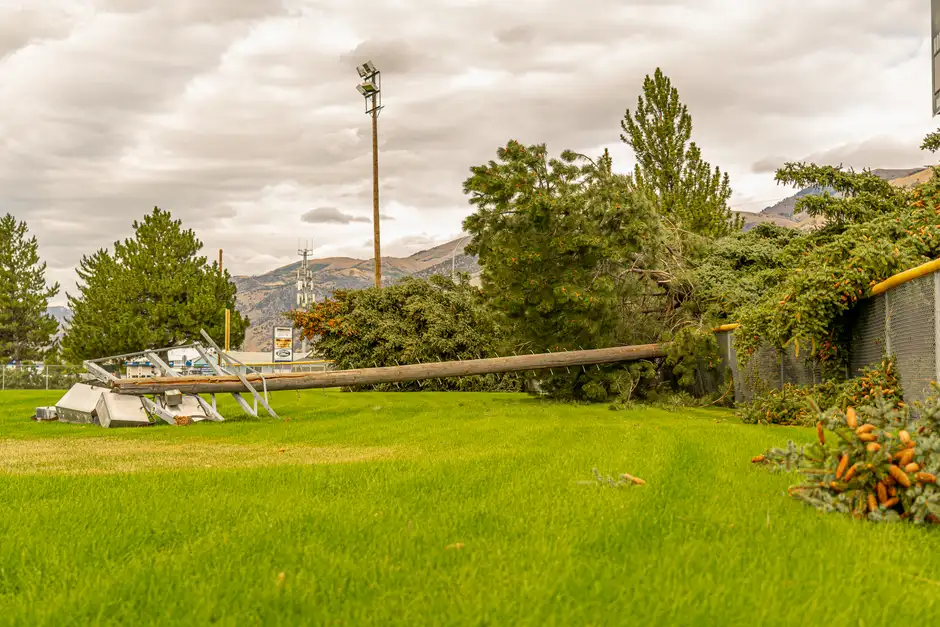
You can prevent most storm-season electrical fires in Goldsboro by upgrading old panels, installing whole-home surge protection, and having a licensed electrician inspect your wiring before the next system hits. The two biggest culprits are aging wiring that can't handle repeated surges and overloaded circuits when homeowners plug in generators or space heaters after an outage. This guide walks you through the specific risks in Wayne County, the pre-storm checklist we run for our own customers, and what it costs to get your home ready in 2026.
Goldsboro sits in a part of North Carolina that sees its share of severe weather - from summer thunderstorms that roll through in minutes to the remnants of coastal systems that push inland each fall. Each one of those events sends a surge of electricity through the grid, and your home's electrical system takes the hit. If you've ever wondered how to prevent electrical fires during Goldsboro storm season NC, the answer starts with understanding what actually fails when the power flickers.
Why Goldsboro Storm Season Creates Electrical Fire Risks
Goldsboro storm season runs roughly from May through November, with the highest risk in late summer and early fall when thunderstorms and tropical remnants are most frequent. During that window, the local grid experiences voltage spikes, brownouts, and full outages that stress every connection in your home. Older neighborhoods near downtown and around Meadow Lane have a lot of homes built between the 1940s and 1970s, and many still have original wiring or panels that were never designed for the electrical load of a modern household. When a storm rolls through, those older systems are the first to fail - and failure often means heat, arcing, or fire.
The problem isn't just the storm itself. It's what happens in the hours and days after. When power comes back on, it doesn't always come back clean. Utilities often restore service in stages, and that can send repeated surges through your panel. If your panel is already marginal, those surges can push a bad breaker or a loose neutral connection past its limit. We've responded to calls in Goldsboro where the fire started not during the storm, but the morning after when the power was restored.
Another factor is water. Storm season means rain, and rain finds its way into outdoor outlets, crawl spaces, and attic junctions. A wet connection is a short circuit waiting to happen. If you have outdoor outlets that aren't GFCI-protected, or if your crawl space has exposed wiring, a heavy rain can create a path for current where there shouldn't be one. That's why we recommend a pre-storm inspection that covers both the panel and the places water tends to collect.
What causes electrical fires during storms in Goldsboro North Carolina?
Electrical fires during storms in Goldsboro North Carolina are most often caused by surge damage to panels and breakers, water intrusion into outdoor or crawl space wiring, and overloaded circuits from backup power sources. The surge is the spark, but the fuel is usually old wiring or a compromised connection that was already there. Here are the specific failure points we see most often:
- Failed breakers that don't trip. A breaker that's been tripped and reset a dozen times can lose its ability to trip at all. When a surge hits, the breaker should cut power - if it doesn't, the current keeps flowing and the wiring heats up.
- Loose neutral connections. The neutral wire carries current back to the panel. If the connection is loose, it creates resistance, and resistance creates heat. In a storm, the vibration and thermal cycling can make a marginal connection fail completely.
- Water in outdoor outlets. Rain driven sideways gets into receptacles that aren't rated for wet locations. Once water bridges the hot and neutral, you get a short circuit. If the breaker doesn't trip fast enough, the outlet box can ignite.
- Backfeeding from portable generators. Plugging a generator into a dryer outlet or using a homemade double-male cord is a leading cause of post-storm electrical fires. It sends power backward through wiring that isn't sized for it and bypasses your panel's protections.
- Aluminum wiring in older homes. Some Goldsboro homes built in the 1960s and 1970s have aluminum branch wiring. Aluminum expands and contracts more than copper, and over decades it can loosen at terminals. A surge can arc across that gap.
If you're in one of the older parts of town - say, near Emergency Electrician in Downtown Goldsboro - we can tell you from experience that the housing stock there has more of these issues than newer subdivisions. The wiring was fine for the 1960s. It's not fine for a 2026 storm season with a house full of electronics.
Pre-Storm Electrical Checklist for Goldsboro Homeowners
Run this checklist before the next named storm or even a forecasted line of thunderstorms. It takes about an hour, and it's the difference between riding out the storm and dealing with a fire.
- Test every GFCI outlet. Press the test button and confirm it trips. If it doesn't, the outlet isn't protecting you. Pay special attention to kitchen, bathroom, garage, and outdoor outlets.
- Check your panel for signs of heat. Look for discolored breakers, a burning smell, or scorch marks around the panel cover. If you see any of that, stop and call an electrician - don't wait for the storm.
- Trim trees away from the service drop. The line coming into your house is the most vulnerable point. Branches within 10 feet of that line can take it down and send a surge through your panel.
- Unplug sensitive electronics before the storm. If you know a storm is coming, unplug TVs, computers, and anything with a circuit board. Surge protectors help, but unplugging is absolute.
- Make sure your generator is connected safely. If you have a portable generator, use a transfer switch or a dedicated generator inlet. Never backfeed through a dryer outlet.
- Look for water stains near the panel. If the panel is in a garage or basement, check for water lines on the wall above it. Water and electricity don't mix, and a panel that's been wet is a fire risk.
If any of those steps turn up a problem, the fix is usually straightforward. A Electrical Panel Repair Goldsboro NC call can replace a bad breaker or tighten a loose connection before it becomes an emergency. We do a lot of these in the weeks before storm season because homeowners would rather pay for a repair now than a fire later.
Surge Protection: What Works and What Doesn't
A whole-home surge protector installed at the panel is the single most effective device for preventing storm-related electrical fires in Goldsboro. It costs between $300 and $800 installed in 2026, depending on panel type and whether you need a dedicated breaker. That's cheap compared to replacing a burned-out HVAC system or rebuilding a kitchen. But not all surge protection is equal.
Point-of-use surge strips - the kind you plug into a wall outlet - protect only what's plugged into them, and they wear out. After a few good surges, the metal oxide varistor inside is depleted and the strip is just an extension cord. Whole-home units are designed to handle the big surges that come in through the service line, and they divert that energy to ground before it reaches your branch circuits.
What whole-home surge protection does not do is fix bad wiring. If you have a loose neutral or a breaker that won't trip, a surge protector won't save you. It's a layer of defense, not a replacement for a healthy electrical system. We install surge protection alongside Electrical Wiring Repair Goldsboro NC when the inspection turns up issues, because the two go together. A surge protector on top of faulty wiring is like a smoke detector in a house with no exits - it might help, but it's not the answer.
For homes with a generator, we also recommend a Generator Installation Goldsboro NC with a proper transfer switch. A standby generator that's wired correctly isolates your home from the grid during an outage, so when power comes back, you don't get a surge through your panel. It's the safest way to keep the lights on without creating a fire hazard.
How to protect your home from electrical fires in Goldsboro
Protecting your home from electrical fires in Goldsboro comes down to three things: a panel that's up to code, wiring that's in good condition, and a plan for what to do when the power goes out. If you're not sure where your system stands, start with an inspection. A licensed electrician can tell you in about 90 minutes whether your panel is safe, whether your wiring has issues, and what it would cost to bring everything up to standard.
We often find that the most vulnerable homes are the ones that have never had an electrical inspection. If you've lived in your house for 10 years and never had anyone look at the panel, you're due. The inspection itself is $150 to $350 in the Goldsboro area in 2026, and it includes a written report with photos. If we find something that needs fixing, we'll give you a flat price before we start. No surprises.
Beyond the inspection, here's what we tell every homeowner in Goldsboro:
- Upgrade your panel if it's a fuse box or a 100-amp service. Modern homes need 200 amps. A Electrical Panel Replacement Goldsboro NC is the best money you'll spend on storm preparedness.
- Install AFCI breakers on bedroom circuits. Arc-fault circuit interrupters detect the kind of arcing that starts fires behind walls. They're required by code for a reason.
- Keep the area around your panel clear. Don't stack boxes or store flammable materials near the panel. If a breaker trips and sparks, you want nothing combustible nearby.
- Know how to shut off your power. If you see smoke or smell burning, shut off the main breaker and get everyone out. Then call 911 and then call an electrician.
If you're looking for an Emergency Electrician Goldsboro NC to handle the inspection and any repairs, we're local and we answer the phone. We've been in enough Goldsboro homes to know the common failure points, and we can usually get you on the schedule within a few days during storm season.
Common Mistakes That Increase Fire Risk
The mistakes that cause electrical fires during storm season are almost always the same ones. Homeowners plug a generator into a dryer outlet because it's the only 240-volt receptacle they have. They ignore a breaker that trips every time the AC kicks on. They run extension cords under rugs to power a space heater after the power comes back. Each of those is a fire waiting for a storm to happen.
Here's what we see most often, and why it's dangerous:
- Backfeeding a generator. This is the number one cause of post-storm electrical fires we see. It sends power back through wiring that isn't protected by a breaker, and it can electrocute a lineman working down the street. Use a transfer switch.
- Resetting a breaker without finding the cause. If a breaker trips, something is wrong. Resetting it without checking why is like putting a bandage on a broken leg. The next trip might be the one that starts a fire.
- Using damaged extension cords. After a storm, people dig out old cords from the garage. If the insulation is cracked or the plug is loose, that cord can overheat. Throw it away.
- Ignoring water damage. If your basement or crawl space flooded, the wiring down there got wet. Even after it dries, the connections can corrode. Have an electrician check it before you turn the power back on.
- Overloading a single circuit. When the power comes back, everyone charges phones, runs the AC, and turns on the TV at once. If those are all on one circuit, you're asking for trouble. Spread the load.
One more mistake: waiting until the storm is here to call. We get a surge of calls the day before a hurricane makes landfall, and we can't get to everyone. If you're reading this in October, you've got time to get on the schedule before the next system. Use it.
When to Call a Professional
Call a professional electrician if you see any of these signs: a burning smell near the panel, breakers that trip repeatedly, discolored outlets, flickering lights that don't stop when the storm passes, or any evidence of water in your electrical panel. Those are not DIY fixes. They're indicators that something in your system is already failing, and a storm will make it worse.
We handle storm-season electrical safety in Goldsboro for homeowners who want a clear answer about their risk. Our team can inspect your panel, test your outlets, and tell you exactly what needs to be done. If it's a simple fix, we'll do it on the spot. If it's a bigger job, we'll give you a flat price and schedule it before the next storm. You can reach us at the number below, or if you're in the downtown area, we're just a few minutes away.
Frequently Asked Questions
How can I prevent electrical fires during storm season in Goldsboro NC?
Install whole-home surge protection, replace any fuse box or 100-amp panel with a 200-amp panel, and have a licensed electrician inspect your wiring before storm season. Test your GFCIs monthly and never backfeed a generator through a dryer outlet. Those four steps prevent the vast majority of storm-related electrical fires.
What causes electrical fires during storms in Goldsboro North Carolina?
The most common causes are surge damage to panels and breakers, water intrusion into outdoor or crawl space wiring, and overloaded circuits from backup power. Older homes with aluminum wiring or fuse boxes are at higher risk. A surge protector helps, but it won't fix a breaker that fails to trip.
Who can inspect my electrical system before storm season in Goldsboro NC?
A licensed electrician with experience in residential storm preparedness. We perform pre-storm inspections that cover your panel, wiring, outlets, and generator hookup. The inspection takes about 90 minutes and includes a written report with photos and a flat price for any recommended repairs.
Are surge protectors enough to prevent electrical fires in Goldsboro?
No. Surge protectors reduce the risk from voltage spikes, but they don't address faulty wiring, loose connections, or breakers that won't trip. They're one layer of defense. You still need a healthy electrical system. A whole-home surge protector plus an annual inspection is the combination that works.
How much does an electrical safety inspection cost in Goldsboro?
Typical 2026 pricing in Goldsboro is $150 to $350 for a residential electrical safety inspection. That includes a panel check, outlet testing, and a written report. If repairs are needed, we provide a flat price before starting. Whole-home surge protection installation runs $300 to $800 on top of that.
Get help with Emergency Electrician in Goldsboro
Storm season in Goldsboro doesn't wait, and neither should you. If you want your electrical system checked before the next system rolls through, call Goldsboro Electric Pros at (919) 850-5629. We'll inspect your home, tell you what needs fixing, and get it done before the weather turns.