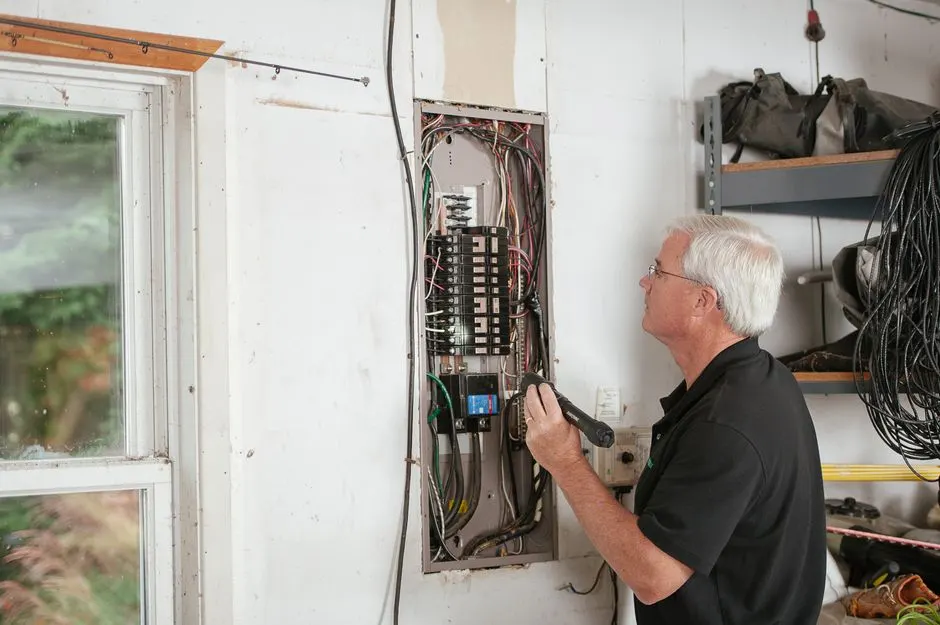
The most common electrical wiring problems in Historic District homes Goldsboro NC are knob-and-tube circuits that were never removed, cloth-insulated wire with brittle crumbling insulation, two-prong outlets with no equipment ground, and main panels that were sized for 60 amps in 1940 and are still carrying a modern load. Any one of those is a fire risk on its own; two or three together in the same house is what we see on most of our calls between Center Street and William Street. This post walks through each problem, how to spot it, what it costs to fix in 2026, and when it stops being a weekend project.
Common electrical wiring problems in Historic District homes Goldsboro NC is a category of age-related failure that shows up when original 1920s-1950s wiring is asked to carry modern appliances, HVAC, and electronics.
The four wiring problems we find most in Goldsboro's Historic District
Goldsboro's Historic District covers roughly a 20-block area of homes built between about 1900 and 1955, and the wiring in those houses falls into four predictable buckets. We have opened enough walls in this neighborhood to know which one you have before we finish the panel inspection.
- Knob-and-tube: two separate conductors run through ceramic knobs in the attic and joists, no ground, often still feeding a bedroom or porch light.
- Cloth and rubber insulated cable: the 1940s-1950s replacement for knob-and-tube, with a fabric outer jacket that has usually dried out by now.
- Two-prong receptacles: original outlets with no third prong, which means no path to ground for anything you plug in.
- Undersized service: a 60-amp or 100-amp panel that was fine for a refrigerator and a radio, and is not fine for a heat pump, EV charger, and a kitchen full of countertop appliances.
We handle all four under one roof, from Electrical Wiring Repair Goldsboro NC on a single bad circuit to a full replacement of the branch wiring in the house.
Knob-and-tube wiring: still live in plenty of Goldsboro attics
Knob-and-tube was the standard wiring method in Goldsboro homes built before about 1940, and it is still energized in a surprising number of attics off Ash Street and Mulberry Street. The system itself was not badly engineered - the problem is what happened to it afterward.
Knob-and-tube conductors are suspended in open air with at least three inches of clearance, which is how they were designed to dissipate heat. The moment someone buried them under blown-in insulation during a 1990s energy upgrade, that clearance disappeared. Add sixty to eighty years of heat cycling, and the cloth braid over the conductor turns to powder.
Three things make knob-and-tube a real hazard rather than a curiosity:
- No equipment ground. There is no third wire, so there is no fault path. A short inside a metal appliance has nowhere to go but through whoever touches it.
- Brittle insulation. Bend the wire and the cloth falls off in flakes, exposing bare copper inside a wall cavity.
- Insurance and inspection pressure. Many carriers now ask specifically about knob-and-tube during underwriting, and a home inspector will flag it every time.
You do not have to rip out every wall to deal with it. On most of these houses we isolate the remaining knob-and-tube runs, replace them circuit by circuit, and leave the historic plaster and trim intact. That work is a good fit for Electrical Wiring Installation Goldsboro NC done room by room rather than a full gut.
Cloth-insulated and rubber wiring that crumbles when you touch it
Cloth-insulated cable from the late 1940s and 1950s is the single most common wiring we replace in this neighborhood, and it fails in a specific way. The outer fabric jacket absorbs humidity for decades, the rubber insulation underneath dries and cracks, and the conductor is left bare inside the jacket.
You can often spot it without opening a wall. Look at the cable where it enters the panel or a junction box - if the jacket is frayed, gummy, or leaves black residue on your fingers, it is past its service life.
We see this pattern most in the blocks closest to downtown, which is why so many of our calls come in as Emergency Electrician in Downtown Goldsboro after a breaker trips and will not reset. Heat is the tell. A cloth-insulated circuit carrying a modern load runs warm at the terminations, and warm terminations are where fires start.
Two-prong outlets, no ground, and missing GFCI protection
Two-prong outlets are the most visible symptom of old house wiring problems Goldsboro homeowners run into, and they are also the most misunderstood. A two-prong outlet is not automatically illegal, but it does mean there is no equipment ground at that location.
What we find behind those outlets is usually worse than the outlet itself. Original receptacles were often fed by a single circuit daisy-chained through six or seven rooms, with backstab connections that have loosened over 70 years. Loose terminations arc, and arcing is what burns houses down.
Three fixes, in order of how often we recommend them:
- Run a proper ground. Best option when the walls are already open during a renovation.
- Install a GFCI at the first outlet on the circuit. Code-compliant for ungrounded circuits when labeled correctly, and it protects everything downstream.
- Replace the receptacles themselves. Even a like-for-like swap removes the worn backstab terminations.
Kitchens, bathrooms, laundry rooms, and any outlet within six feet of a sink need GFCI protection. We install that as GFCI Outlet Installation Goldsboro NC, and on these older circuits it is usually the highest-value safety upgrade you can make for the money.
Overloaded panels and doubled-up breakers
A 60-amp fuse panel or a 100-amp breaker panel was correctly sized for a 1948 house with a refrigerator, a radio, and a few lamps. That same panel today is carrying a heat pump, an electric range, a dryer, a tankless water heater, and a garage full of power tools.
We open panels in this neighborhood every week and find the same shortcuts: two circuits under one breaker, breakers that are warm to the touch, and feeders that were spliced rather than replaced. A warm breaker is not a quirk. It is a loose connection converting electricity into heat inside your wall.
If your panel is a fuse box rather than a breaker panel, that changes the conversation. Edison-base fuses can be defeated with a penny or an oversized fuse, and we have pulled both out of Goldsboro fuse boxes. That is a job for Fuse Box Repair Goldsboro NC or a full panel replacement, not a DIY fix.
Is old wiring dangerous in historic Goldsboro homes?
Yes - old wiring in historic Goldsboro homes is dangerous when the insulation is brittle, the circuit has no ground, or the load has outgrown the panel, and those three conditions are present in most pre-1960 houses here. Age alone is not the hazard; condition and load are.
Three warning signs mean you should stop using the circuit and call us today:
- A burning or fishy smell near an outlet or switch plate, with no obvious source.
- A breaker that trips repeatedly on the same circuit, or a fuse that blows every time you run the microwave.
- Warm or discolored faceplates, or a faint buzzing from a switch when it is on.
Any of those three is a same-day call. We would rather spend an hour tracing a circuit than have you find out at 2 a.m. that the smell was a junction box in the attic.
Can historic home wiring be updated in Goldsboro North Carolina?
Historic home wiring in Goldsboro North Carolina can absolutely be updated, and it does not require gutting the house or losing the plaster walls and original trim that make the neighborhood worth living in. We do it in stages, and most homeowners spread the work across two or three visits.
A typical sequence looks like this:
- Panel and service first. Bring the service up to 200 amps and install AFCI and GFCI breakers. This is the foundation everything else sits on.
- High-risk circuits second. Kitchen, bathrooms, laundry, and any circuit feeding a bedroom get replaced first.
- Remaining branch circuits third. Living areas, porches, and outbuildings get done as budget allows.
When the scope is large enough that most of the original wire is coming out, the job becomes Whole Home Rewiring Goldsboro NC, and we plan it around your occupancy so you are never without power to the refrigerator or the heat.
What to watch out for before you buy or renovate
Two mistakes cost Goldsboro homeowners real money on historic houses: trusting a home inspection to catch wiring problems, and letting a general contractor handle electrical as a side task.
A standard home inspection is visual. It will note two-prong outlets and an old panel, but it will not open a junction box or test insulation resistance. We have walked into houses that passed inspection with cloth wiring actively arcing inside a bedroom wall.
The other mistake is the renovation shortcut. New drywall over old knob-and-tube looks fine for about a year, then the buried conductors overheat because they lost their air clearance. If you are renovating, the wiring has to be addressed before the walls close, not after.
One more: do not let anyone talk you into a partial fix that leaves a mixed system with no documentation. When we finish, you get a labeled panel and a written record of what was replaced and what was left in place. That paperwork matters at resale.
When to call a professional
Call a licensed electrician the moment you see scorching, smell burning, or find a breaker that will not reset - those are not diagnostic puzzles, they are active hazards. For anything less urgent, call us when you are planning a renovation, adding a heat pump or EV charger, or buying a historic home and want the wiring assessed before you close.
Our team works this neighborhood constantly, so we already know the wiring patterns in these houses and where the surprises usually hide. We give you a flat price before we start, and we do not leave a circuit half-finished. If you want a straight answer about the wiring in your house, Emergency Electrician Goldsboro NC is the number to call.
Frequently Asked Questions
What are common electrical wiring problems in Historic District homes in Goldsboro NC?
The four we find most are knob-and-tube circuits still in service, brittle cloth-insulated cable from the 1940s and 1950s, two-prong ungrounded outlets, and 60-amp or 100-amp panels carrying modern loads. Most pre-1960 houses here have at least two of the four.
Is old wiring dangerous in historic Goldsboro homes?
It is dangerous when the insulation is brittle, the circuit is ungrounded, or the panel is overloaded - conditions we find in most pre-1960 houses here. Age alone is not the hazard. Burning smells, warm faceplates, and breakers that trip repeatedly are same-day calls.
Who fixes historic home wiring near me in Goldsboro NC?
A licensed electrical contractor with experience in older homes, not a handyman. We handle everything from a single circuit to a full rewire, and we work around original plaster and trim instead of tearing it out. Call (919) 850-5629.
Can historic home wiring be updated in Goldsboro North Carolina?
Yes, and it rarely requires gutting the house. We upgrade the panel and service first, replace the highest-risk circuits second, and finish the remaining branch circuits as budget allows. Most homes are done across two or three visits.
How much does it cost to fix historic home wiring in Goldsboro?
Typical 2026 pricing in this area runs $350 to $900 to repair or replace a single circuit, $1,800 to $4,500 for a panel and service upgrade, and $8,000 to $20,000 for a whole-home rewire depending on square footage and how much plaster has to be opened.
Get help with Emergency Electrician in Goldsboro
If your historic home has cloth wiring, a fuse box, or a breaker that keeps tripping, we can look at it today and tell you exactly what needs to change. Call Goldsboro Electric Pros at (919) 850-5629 and we will get a technician to your door.